
Stratification Methods
Stratification is the process in which a seed experiences a set of conditions that will break its natural dormancy so it may germinate.
If a seed just needed moisture and warm temperature to germinate, then this could happen in Autumn. A seed germinating in Autumn would probably not survive a cold winter. Evolution has taught seeds from many plants, perennial natives for example, to not germinate until they have spent a certain amount of time in a cold/moist environment, Then, under warm moist and sometime light, they germinate.
Other seeds that have no stratification period may have come from plants that don’t shed their seeds until so late in the fall the seeds never experience the conditions of warmth required to germinate. Others come from plants that are very early flowering plants that produce seed by July, ensuring sufficient time for the plant to mature so it can survive the winter.
If seeds require stratification according to the seed packet/information sheets, there are four Stratification Methods.
Late fall. In the late fall, plant seeds directly in the garden. Plant more than you need in case of critters and poor germination rate. Mark the location well. Watch for the seedlings in the spring, then thin and cultivate appropriately.
Winter Seed Sowing. Plant seeds in containers and then place them outside to await spring. They must be protected from critters and protected from drying out. Craft large clear or translucent plastic containers fashioned from jugs that contain a lid, use a plastic tote box to hold pots, use recycled plastic salad boxes or even a regular plastic flat with seed cells and a domed top.
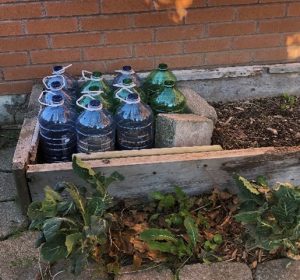
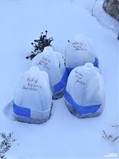
Ensure enough holes in the bottom of the seed container to allow for rain/snow melt to drain. Fill your container with moist potting soil, plant the seeds, label, and cover with a plastic dome, (Leave the lid off any jug.) Secure the domed top cover with a piece of duct tape and/or wrap twine around the entire box affair.
Place it outside in the snow in a shady area or where it will only get morning sun to avoid premature germination. Mark the spot with a stick. Come spring attend to the emerging seedlings daily by opening/closing the top and watering as required by the weather. Transplant to the garden or to small pots as appropriate.
Late Winter. Determine how long your chosen seeds need to be stratified from stratification lists or the seed package. To this number, add the amount of time your seeds require to germinate after the stratification then add the time required to raise them from germination to transplant age. Start the stratification process that number of weeks before the last spring frost date. They should be ready to transplant, but there is no hurry to plant, they have all summer to establish themselves before their first winter.
Cold Stratify in the Refrigerator. You could place the pots with your seeds planted directly in a refrigerator until they germinate. Do not cover them in the frig and keep them moist. More commonly the paper towel/coffee filter and plastic zip lock bag method is used.
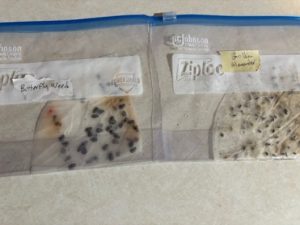
Lay a paper towel/coffee filter out flat. Fold it in half. Fold it in half again (now quarters). Unfold it so that the exposed surface area is now half of the original. Moisten the paper by misting. (Not dripping.) Place your seeds on one half of the now-moist paper (that is already folded in half once) and fold the paper along the crease previously made, so that the seeds are sandwiched between two layers of paper. Place this in a zip lock bag, seal and label. Put the bag in the frig for the required number of weeks to stratify, then pot them up and await germination (if not already). Grow them to transplant stage.
You can use moistened perlite or vermiculite in a zip lock bag instead.
Early Spring. Not enough weeks left in winter to accomplish any of the above?
Cold Stratification in the Refrigerator and Freezer. Add the days required for germination plus the days required to grow them to transplant size. That number of days before the last spring frost, begin. Follow the cold stratify in the refrigerator instructions but only put the bag in the frig for 24 hours. Then place it in the freezer for 24 hours. Repeat this 6 times. Plant the seeds in pots and await germination and growth.
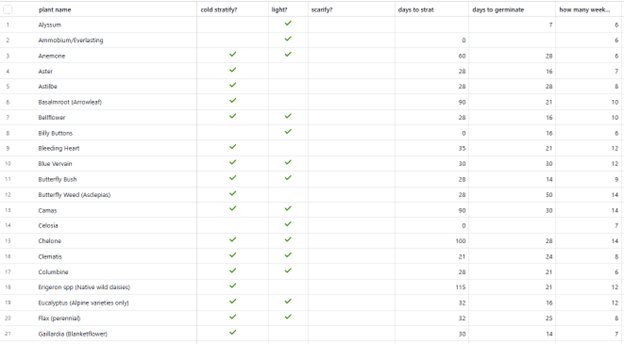
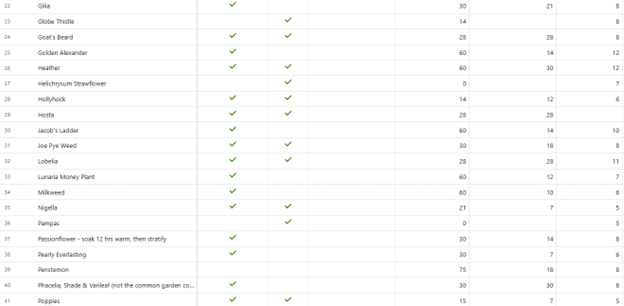
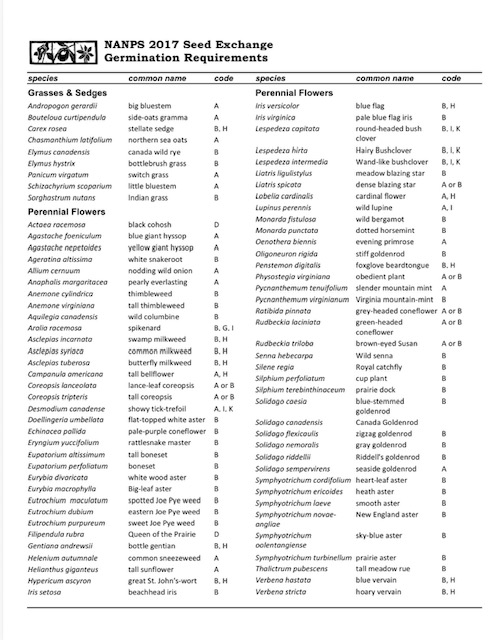
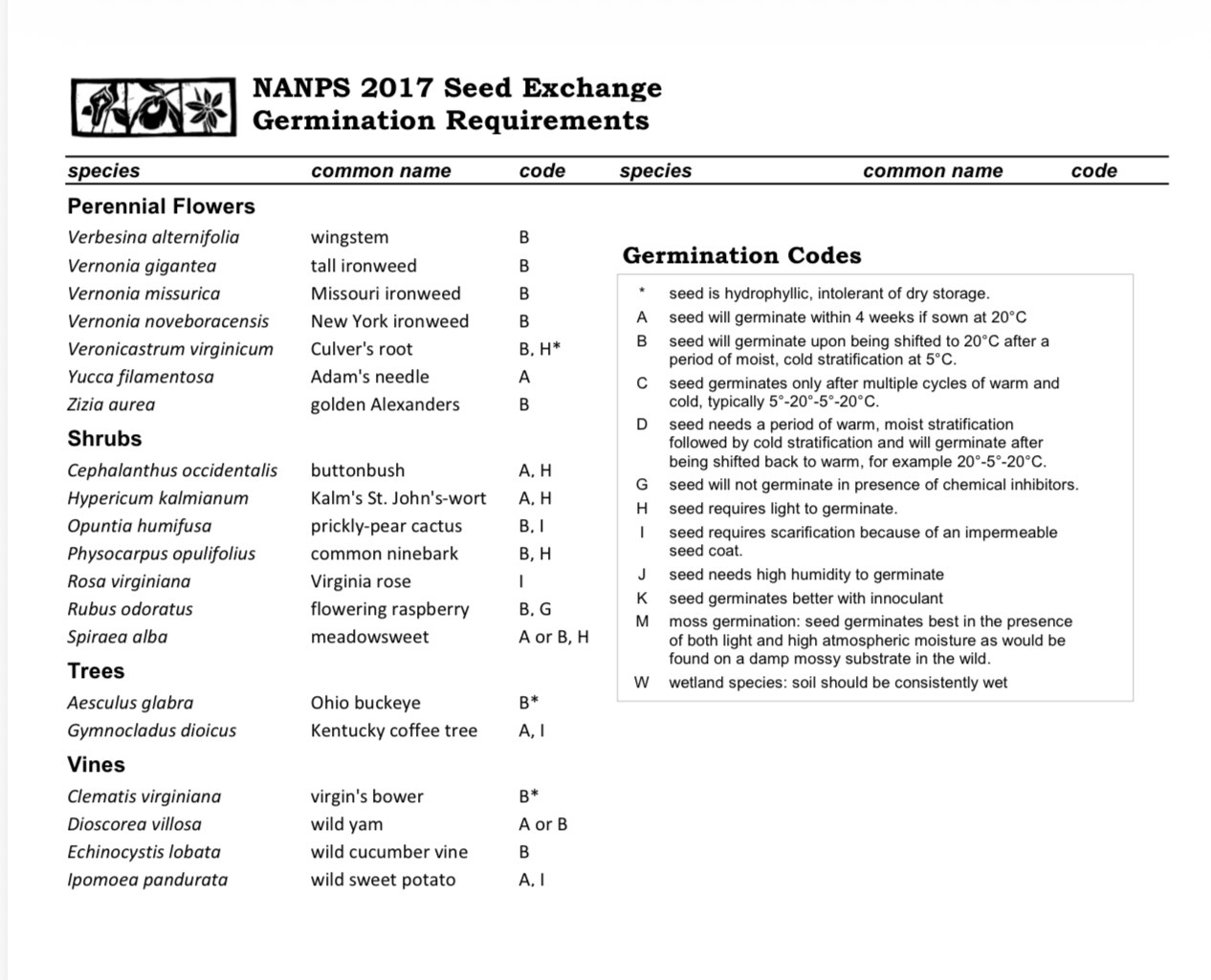
Reference lists of stratification times and germination times can be found below, as well as, easy downloadable PDFs.
Just press the below buttons OR keep scrolling down
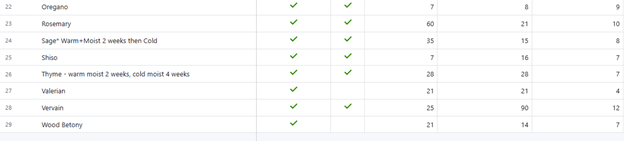
Stratification table for Herbs
Download available above
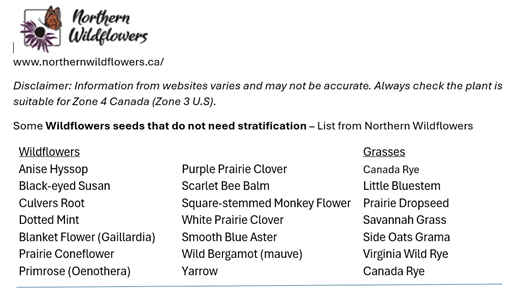
Disclaimer: Information from websites varies and may not be accurate. Always check the plant is suitable for Zone 4 Canada (Zone 3 U.S). Stratification Table Herbs
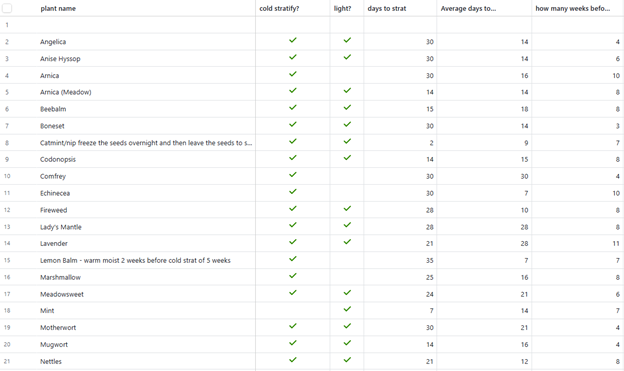
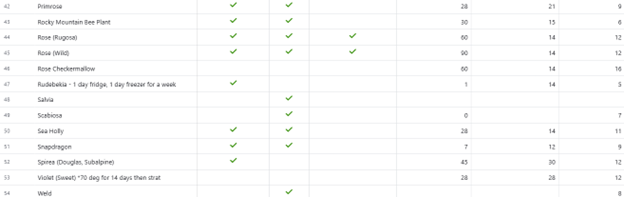
Stratification Table Flowers
Download available above
Disclaimer: Information from websites varies and may not be accurate. Always check the plant is suitable for Zone 4 Canada (Zone 3 U.S).


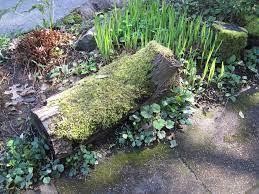
 Haliburton County Master Gardener advises you to build a small rain garden at the top of your slope. Add a small berm at the top of and/or mid-way down your slope. Put in a berm of logs, branches, soil and/or rocks to slow down the water running off and to allow time for the rain to absorb and for plant roots to establish. The idea is to place any material that will act to obstruct or slow down the path of water. Organic material has the additional benefit of providing texture and nutrients to your soil as it breaks down.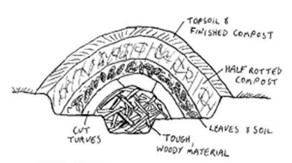

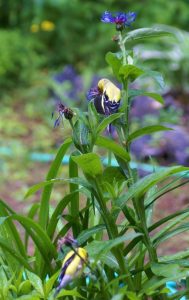 Grasses furnish sufficient shelter for finches and sparrows that prefer foraging in lower branches and also attract insects for warblers. Grasses also provide excellent nesting material and the tall grasses such as Karl Foerster(Calamagrostis x acutiflora ‘Karl Foerster’) lend themselves to planting near the back of the border with shorter grasses such as Blue Oat Grass (Helictotrichon sempervirens) as accents closer to the front of the garden.