• Skip to primary navigation
  • Skip to main content

Haliburton County Master Gardeners

Gardening in Haliburton County

sign up
site search
  • Ask a Question
    • MG Questions Answered
  • Request a Consult
  • Resources
    • Garden with Nature
      • For Your Property Including Shorelines
      • Go Wild
      • Invasives
      • Native Plants & Native Shorelines
      • Sunny Sites
      • Trees
      • Woodland
    • Gardening for Guilty Pleasure
      • Perennials
      • Planning and Design
    • Growing Food
      • Fruits
      • Herbs
      • Native Edibles
      • Pruning and Other Practices
      • Vegetables
      • Soil
    • Native Plants
      • Selection of Native Plants for the Highlands
    • Zone 4 Challenges
      • Pests
      • Tips
      • Wildlife
    • Useful Links
      • Canoe Radio Podcasts
      • County Life Magazine
      • MGOI Website
      • Videos
  • Guidebook
  • About
    • How to Become a Master Gardener
  • What’s On
    • Events Calendar
    • Butterflyway Project
    • Stepping into Nature
  • Buy Local
  • Contact
  • Facebook logo
  • YouTube logo
  • Printer icon graphic

Garden with Nature

Crop Rotation

January 2, 2026

Garden Carrots

Crop Rotation is not just for Farmers

You are what you eat! In this day and age when increasing attention is paid to the quality of the food we eat, more and more people want to grow their own food. As a hallmark for sustainable farming, crop rotation minimizes problems down the road while preserving soil structure and health.

Crop rotation is not just for the farmers. It can be put to use in small plots of land as well. By rotating crops each season; we promote a natural method of pest control which helps to break disease cycles that can occur when the same crop is grown in the same spot for successive years. For example, Clubroot is a soil borne fungus that affects brassicas, and accumulates from successive growth in the same location. Mono cropping also depletes the soil of nutrients specific to that crop. In the same way our bodies can ache if we do the same thing over and over, the soil can get tired if we plant the same vegetable, year after year in the same spot.

Simply put, crop rotation requires you to avoid growing the same crop in the same spot year after year. Plant your like family vegetables in a different spot than the previous year and rotate your different crops like a cycle. It’s helpful that some vegetables will replenish lost nutrients back to the soil after a crop has been harvested. It helps to grow legumes after heavy feeders like corn or leafy vegetables. While you’re at it, add in some green manure like clover to enrich the soil. No matter what vegetables you are growing, there are many rotations to suit your needs. You decide!

Remember that any crop rotation is a work in progress, and much of the enjoyment and challenge comes from experimenting with it each year as you learn from previous years. By keeping in mind a few things, it will make it much easier to work out a suitable rotation for you.

  • Know botanical names of your vegetables and group vegetables from the same family together
  • Explore the internet as  there are a wealth of resources 
  • Keep a notebook to record observations and keep accurate records 
  • Grow green manure as it enriches the soil like essential nutrients for the body
  • Alternate deep rooted and shallow rooted crops to promote a balanced draw
  • Leafy vegetables generally use a lot of nitrogen so plant soil builders like beans prior to growing lettuce

Some basic types of groupings that may work for you include: heavy feeders (broccoli, lettuce, tomatoes, eggplant, corn, squash); light feeders (carrots, turnips, sweet potatoes, peppers, garlic, onions, chives); nitrogen fixing (soil builders – green beans, lima beans, peas, soybeans); green manures (clover, vetch, alfalfa, rye, buckwheat).

Article written by Shane Rajapakse for the MGOI newsletter and reprinted here with permission.

Editor’s Note:  More gardeners are practicing a technique called chop and drop. Essentially you cut back your weeds and grasses before they go to seed and leave them on your garden as green manure mulch.  The nutrients are available immediately to the plants and the mulch helps the soil to retain moisture, repress weeds and improve soil structure.


Filed Under: Fruits, Garden with Nature, Growing Food, Herbs, Pruning and Other Practices

Six Native Plants to Incorporate Into Your Landscape in 2025

January 29, 2025

It’s the new year, and if you are like us Haliburton County Master Gardeners, these -20℃ nights lately have us dreaming of spring. And even though the ground is frozen and covered in a few feet of snow, there is plenty you can do to prepare for your 2025 garden and landscaping goals. Is it time to really naturalize your shoreline? Looking to attract pollinators? Whatever your goals, planting more native plants is almost always the answer. 


Reminder! In Canada, there are 10 identified Plant Hardiness Zones that take into account a wide range of factors including snowfall, elevation, wind and others. The higher the zone number, the warmer the climate. Haliburton County is a Zone 4 region. 

Why Plant Native Plants? 

Native plants are plant species that naturally occur in a specific region or ecosystem without human introduction. They have spent thousands of years evolving to not only be resilient to the climate of their region but also support the local environment including reducing erosion (hello shorelines), stabilizing soil and providing shelter and sustenance for local wildlife. 

Six Native Plants to Get You Started in 2025


The following plants are native species that are also considered ‘keystone plants’. Keystone plants attract more wildlife and are particularly beneficial to native insects. We recommend the following plants and other keystone species make the backbone of your plantings. 


Note: To see a larger selection of Native Plants that we recommend, including more ornamental plants and a larger range that would work for the sun and moisture levels of your property, be sure to grab your copy of the Guidebook to Ecological Landscaping in the Highlands available for purchase at businesses across the county. 


  1. Red Oak (Quercus rubra) 
  2. Basswood (Tilia americana) 
  3. Serviceberry (Amelanchier) 
  4. Highbush Cranberry (Viburnum trilobum) 
  5. Red Osier Dogwood (Cornus sericea) 
  6. Meadowsweet (Spiraea alba var latifolia) 

Red Osier Dogwood along Minden Riverwalk (photo credit: Shelley Fellows)

Serviceberry in bloom (photo credit: Shelley Fellows)

Meadowsweet, also along the Minden Riverwalk (photo credit: Shelley Fellows)

Highbush Cranberry (photo credit: Carolyn Langdon)


As with any planting, you want to take into consideration the various environmental elements that your property has. Where is it shady versus more consistently full sun? How moist is your soil and what is the natural drainage like? What wildlife and pollinators do you want to host? 


These are all questions to consider, among others, when researching which native plants to bring to your landscape. The Haliburton County Master Gardeners can support you with a donation-based consultation or – if you’re up for your own research and reading – we recommend grabbing your own copy of our Guidebook for Ecological Landscaping in the Highlands as a starting point. 


Stay warm, and happy researching! 

Filed Under: Garden with Nature, Guidebook, Native Plants, Native Plants & Native Shorelines

Native Plants for Your Property Including Shorelines

August 4, 2024

Native Plants for Your Property Including Shorelines

There are many good reasons to maintain a backbone of native plants with the exotic ornamental plants acting as accent or highlight plantings, particularly along shorelines. Use this 75 page directory to identify the natives you have and others you may wish to plant.

View PDF here>

Filed Under: For Your Property Including Shorelines, Garden with Nature

Plants and Deer

August 3, 2024

White tail deer are common in the Highlands; we are living in their preferred habitat of mixed forest with open meadows. We all love to see these exquisite creatures until they start nibbling on our most precious plants, usually our favorites. Deer will eat almost anything if they are hungry, such as the first wild leeks of spring but they much prefer a salad buffet of non-native hostas.

Many gardeners have their own deer-proofing ideas ~ from the bar of soap hanging from a tree to a string of aluminum foil plates waving in the breeze. While some of these may work from time to time there are other strategies that may have a longer lasting effect.

These strategies include avoiding the deer favourite plants and choosing plants that deer generally don’t like.

It may seem like deer will eat anything, but in fact they have distinct preferences. The plants listed below are particular favourites of deer and may draw them into your garden. Unfortunately, our favourites are often deer favourites!

Deer Resistant Plants

Deer have an innate sense of determining what foods are good for them and what is not. They know the poisonous plants to avoid but like humans, there are some plants they just don’t like. Some key points when considering plants:

  • if a plant makes them sick or is associated with a bad experience they will avoid it
  • how hungry they are … plants they don’t like may become much tastier than before
  • some individual deer may like plants that most do not
  • deer often avoid plants with a strong fragrance, fuzzy or prickly texture or bitter taste ~ often but not always

This Deer Resistant Plant list is composed from the personal observations of several local residents.

• Allium (Allium)
• Lily of the Valley (Converaria majalis)
• Angel’s Trumpet (Datura)
• Lupins (Lupinus)
• Brown/black eyed Susans (Rudbeckia)
• Lilacs (Syringa vulgarism)
• Butterfly weed (Asclepias)
• Lavender (Lavendula)
• Bleeding Heart (Dicentra spectabilis)
• Daphne (Papyricea)
• Cleome (Cleome)
• Blazing Star (Liatris)
• Cosmos (Cosmos)
• Marigolds (Tagetas)
• Daffodils (Narcissus)
• Monkshood (Aconite)
• Delphinium (Delphinium)
• Nicotiana (Nicotiana)
• Foxglove (Digitalis)
• Peonies (Paeonia Lactiflora)
• Globeflowers (Trollius)
• Rhubarb (Rhubarb)
• Goldenrod (Solidago vigaurea)
• Shasta Daisy (Laucanthemum)
• Iris (Iris)
• Valeriun (Valeriana officinalis)
• Juniper (Juniperas)
• Pines (Pinus)
• Spruce (Picea)

It has been suggested that Deer don’t like fuzzy leaves but they will on occasion eat lambs ears. They also don’t like aromatic plants but have been known to eat Artemesia. Often deer won’t eat prickly plants although they seem to like rosebushes. Deer don’t seem to eat ferns and various grasses and other wild plants which suggests they are good to grow.

These are more suggestions for growing plants that deer would not like to eat.

• ajuga
• alchemilla
• beebalm
• campanula
• catmint
• coneflower
• cranesbill
• cup plant
• euphorbias
• forget me not
• gaillardia
• helianthus
• hellebores
• liatris
• obedient plant
• sun drops
• tickseed
• yarrow

Deer Favourites

It may seem like deer will eat anything, but in fact they have distinct preferences. The plants listed below are particular favourites of deer and may draw them into your garden. Unfortunately our favourites are often deer favourites!

Trees, Shrubs, Vines:

Azaleas (Rhododendron spp.): Both deciduous & evergreen
English Ivy (Hedera helix)
Euonymus (Euonymus)
Fir (Abies spp.)
Hybrid Tea Roses (Rosa odorata hybrids)
Japanese Yews (Taxus cuspidata)
Mountain Ash (Sorbus spp.)

Vegetable Garden Plants:

Beans (Phaseolus spp.)
Blackberries, Raspberries (Rubus spp.)
Broccoli, Cauliflower (Brassica spp.)
Lettuce (Lactuca spp.)
Peas (Pisum satirum)
Strawberries (Fragaria spp.)
Sweet Corn (Zea mays)

Filed Under: Garden with Nature, Invasives, Native Plants & Native Shorelines, Pests, Wildlife

Deterring Canada Geese

June 25, 2024

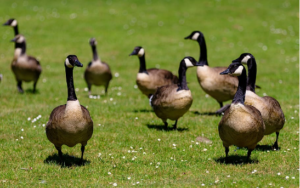
Did you know that the Canada goose is not native to the Haliburton region? Historically their nesting grounds were limited to the Arctic tundra, to the Western Prairies and to the grasslands and wetlands of southwest Ontario. They were nearly extinct 100 years ago because of overhunting and the drainage of wetlands. In the intervening years conservation efforts and government wildlife laws re-established their numbers in the millions.

Canada GeeseHuman settlement has also rapidly changed the once forested Ontario landscape to one of vast expanses of manicured grass, suburban sprawl and fields of corn and grain. With few predators and abundant food supply the exploding populations of Canada goose are overgrazing and despoiling the land and water. They are also taking over habitats once the preserve of native species of birds.
Geese leave large quantities of molted feathers and droppings, up to 2 kg per bird per day, which have health risks to humans and consequences for other species, the land and water. Competition for feeding and nesting material can also spread diseases such as botulism, cholera, or avian flu among geese. The habitat in our region did not evolve to support such a large bird species with its large brood and insatiable demand for food and space. The fragile ecosystem of the Canadian Shield is being negatively impacted by this large bird with a voracious appetite.

WHAT CAN WE DO?
Most animals are self-regulating and their population numbers will adjust to the habitat available. If you want to reduce the number of geese from the Highlands and restore species balance you need to make your property unattractive to them.The kindest and most effective way to do that is to change the landscape.They like to eat grass and they like wide open spaces so that they can keep an eye on any advancing predators. They are also suspicious of any shrubs that might provide cover for predators.

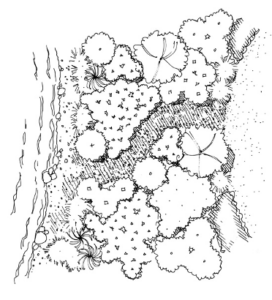
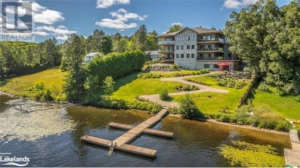
The first step is to plant a physical and visual barrier of shrubs along the water. A cost effective solution for a large area would be to use Red Osier Dogwood (Cornus sericea) and Willow (Salix) cuttings purchased or taken from nearby plants in the very early spring. Ten to twelve inch cuttings can simply be stuck into the ground to a depth of 6”. The abundant rain and flooding of the riverbank will soon have them putting out roots. White Meadowsweet (Spirea alba) is readily available at nurseries and is another quick growing dense shrub to deter geese. For a year or so while your shrubs are maturing you’ll need a line with flags or flashing tape to prevent the geese from coming up out of the water onto your lawn. This barrier will only work for the 6 weeks, during July and August when the geese are molting and lose their flight feathers preventing them from flying. During the rest of the year they will simply fly over any barrier.Vegetation on Shoreline


The second step at this stage is to interrupt the vast expanse of grass with shrubs, trees, and other plants, preferably native. A small grove of Pagoda Dogwood (Cornus alternifolia), a medium growing shrub with showy spring flowers and an open branch structure would be a good choice for any location. You could incorporate a snaking path to the water if access is required.

It may take 2-3 years to fully vegetate your waterfront to deter the geese. Geese like to return to the same nesting location year after year so you’ll have to be vigilant if you have nesting geese on
your property.
It may take you some time to adjust to the more natural look, but you’ll rejoice when you’ve succeeded at eliminating the Canada Geese who were fouling your property, polluting your water and ousting the smaller native birds.

IN BRIEF
1. Deprive geese of the grass that

Zig Zag path to water at Walling Wall

they like to eat and obscure their line of sight with plants
2. Design a narrow zig zag shaped walking path to the water
3. Reduce grass, mow less often and add native plants
4. Plant a continuous 30” high band of dense native plants along the shoreline as deep as you can (20-30 feet deep recommended but anything will help). These plantings will provide a physical barrier and with reduced site lines the geese will fear predators and stay away.
5. Erect a temporary barrier of two rows of line or reflective scare tape until the vegetation fills in.
6. Encourage aquatic plants such as bulrushes and cattails that work to deter geese.
7. Plant trees and understory shrubs to obstruct their overhead line of sight.


Carolyn Langdon, Master Gardener 2023

References:
https://www.canada.ca/en/environment-climate-change/services/migratory-bird-conservation/publications/handbook-managing-cackling-geese-southern/chapter-3.html#_toc070102
https://www.lesslawn.com/articles/article1034.html
https://www.allaboutbirds.org/guide/Canada_Goose/lifehistory

Filed Under: Garden with Nature, Invasives, Native Plants & Native Shorelines, Pests, Wildlife

Goldenrod (Solidago canadensis)

November 16, 2023

Excerpt from OMAFRA Publication 505 ‘Ontario Weeds’

It is essential that Goldenrod, Solidago spp., [verge d’or, solidage], not be confused with Common ragweed. Several species of Goldenrod occur throughout Ontario in meadows, pastures, woodland, river flats and roadsides, and have very conspicuous bright yellow inflorescences during the ragweed hayfever season of late summer and autumn. Goldenrods do produce pollen but only in small quantities, and their pollen is heavy and sticky. It is not carried on the wind and the plants are pollinated by insects. Because Goldenrod pollen is not carried on the wind, it must not be blamed as the source of irritation for ragweed hay fever sufferers.

Common ragweed is the most important cause of hay fever during August and September. Although inconspicuous and not recognized by most people, the tiny male flower beads hanging on their slender stalks produce huge quantities of very light pollen. As the pollen falls from these hanging flowers, it is caught by the wind and may be carried for distances greater than 200 km (125 miles). Hay fever sufferers, therefore, may be affected by pollen from ragweed plants far away.

  • Easy to grow and easy to pull out
  • Available in nurseries as Solidago
  • Beautiful; good for cut flowers
  • Sun; tolerant of dry or wet conditions, Zone 3
  • Attracts butterflies and bees
  • 35-70 cm (1-2 feet) tall and 45 cm (1 ½ ft) wide
  • DOES NOT PRODUCE WIND BLOWN POLLEN OR CAUSE HAYFEVER
  • Blooms late summer and fall
  • Winter interest and seeds for birds


Goldenrod Vs Ragweed

Filed Under: Garden with Nature, Invasives, Pruning and Other Practices, Woodland

  • Page 1
  • Page 2
  • Page 3
  • Page 4
  • Go to Next Page »

coordinator@haliburtonmastergardener.ca

privacy policy

Haliburton County Development Corporation logo


HCMG logo
Member Login
  • Ask a Question
  • Resources
  • About
  • News & Events

Follow us on YouTube badge

  • Newsletter Signup
  • Contact
  • Buy Local

© 2026 HaliburtonMasterGardener.ca   •   Website Development by TechnicalitiesPlus Inc.