• Skip to primary navigation
  • Skip to main content

Haliburton County Master Gardeners

Gardening in Haliburton County

sign up
site search
  • Ask a Question
    • MG Questions Answered
  • Request a Consult
  • Resources
    • Garden with Nature
      • For Your Property Including Shorelines
      • Go Wild
      • Invasives
      • Native Plants & Native Shorelines
      • Sunny Sites
      • Trees
      • Woodland
    • Gardening for Guilty Pleasure
      • Perennials
      • Planning and Design
    • Growing Food
      • Fruits
      • Herbs
      • Native Edibles
      • Pruning and Other Practices
      • Vegetables
      • Soil
    • Native Plants
      • Selection of Native Plants for the Highlands
    • Zone 4 Challenges
      • Pests
      • Tips
      • Wildlife
    • Useful Links
      • Canoe Radio Podcasts
      • County Life Magazine
      • MGOI Website
      • Videos
  • Guidebook
  • About
    • How to Become a Master Gardener
  • What’s On
    • Events Calendar
    • Butterflyway Project
    • Stepping into Nature
  • Buy Local
  • Contact
  • Facebook logo
  • YouTube logo
  • Printer icon graphic

Haliburton County

Pruning and Maintenance of Rose Bushes

January 1, 2026

General Care:

  • Mulch to conserve moisture and reduce weeds.
  • Water 1 inch per week from spring until after harvest.
  • Roses are heavy feeders.
  • Spring: Fertilize with a slow release, balanced fertilizer.
  • Throughout season: Feed every 4 weeks.
  • Late summer, early fall: Stop fertilizing 6 – 8 weeks before frost date in preparation for winter.
  • NOTE: Very sharp thorns. Wear gloves when handling.

Pests & Diseases:

  • Susceptible to rose borers, powdery mildew, and fungus.

Late Winter/Early Spring Pruning Steps (start of new growth):

  • Remove all remaining leaves.
  • Prune dead wood back to the base.
  • Prune out crossing branches. Ideally create an open vase-like shape to increase air circulation.
  • Remove thin and weak growth (anything thinner than a pencil).
  • Shape the remaining canes into desired shape by cutting ¼” – ½” above an outward facing bud, at an angle sloping away from the bud.
  • Dispose of any leaves and waste to prevent spread of disease.

Fall Pruning (after killing frost):

  • Prune only as needed for winter preparation.
  • Trim longer stems to keep from snapping in winter storms.
  • Trim crossed branches to prevent rubbing.
  • Remove dead/diseased branches and foliage. 


Rose Bush Pruning Diagram


Filed Under: Gardening for Guilty Pleasure, Perennials, Planning and Design, Pruning and Other Practices

Six Native Plants to Incorporate Into Your Landscape in 2025

January 29, 2025

It’s the new year, and if you are like us Haliburton County Master Gardeners, these -20℃ nights lately have us dreaming of spring. And even though the ground is frozen and covered in a few feet of snow, there is plenty you can do to prepare for your 2025 garden and landscaping goals. Is it time to really naturalize your shoreline? Looking to attract pollinators? Whatever your goals, planting more native plants is almost always the answer. 


Reminder! In Canada, there are 10 identified Plant Hardiness Zones that take into account a wide range of factors including snowfall, elevation, wind and others. The higher the zone number, the warmer the climate. Haliburton County is a Zone 4 region. 

Why Plant Native Plants? 

Native plants are plant species that naturally occur in a specific region or ecosystem without human introduction. They have spent thousands of years evolving to not only be resilient to the climate of their region but also support the local environment including reducing erosion (hello shorelines), stabilizing soil and providing shelter and sustenance for local wildlife. 

Six Native Plants to Get You Started in 2025


The following plants are native species that are also considered ‘keystone plants’. Keystone plants attract more wildlife and are particularly beneficial to native insects. We recommend the following plants and other keystone species make the backbone of your plantings. 


Note: To see a larger selection of Native Plants that we recommend, including more ornamental plants and a larger range that would work for the sun and moisture levels of your property, be sure to grab your copy of the Guidebook to Ecological Landscaping in the Highlands available for purchase at businesses across the county. 


  1. Red Oak (Quercus rubra) 
  2. Basswood (Tilia americana) 
  3. Serviceberry (Amelanchier) 
  4. Highbush Cranberry (Viburnum trilobum) 
  5. Red Osier Dogwood (Cornus sericea) 
  6. Meadowsweet (Spiraea alba var latifolia) 

Red Osier Dogwood along Minden Riverwalk (photo credit: Shelley Fellows)

Serviceberry in bloom (photo credit: Shelley Fellows)

Meadowsweet, also along the Minden Riverwalk (photo credit: Shelley Fellows)

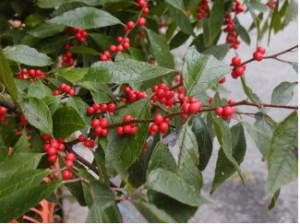
Highbush Cranberry (photo credit: Carolyn Langdon)


As with any planting, you want to take into consideration the various environmental elements that your property has. Where is it shady versus more consistently full sun? How moist is your soil and what is the natural drainage like? What wildlife and pollinators do you want to host? 


These are all questions to consider, among others, when researching which native plants to bring to your landscape. The Haliburton County Master Gardeners can support you with a donation-based consultation or – if you’re up for your own research and reading – we recommend grabbing your own copy of our Guidebook for Ecological Landscaping in the Highlands as a starting point. 


Stay warm, and happy researching! 

Filed Under: Garden with Nature, Guidebook, Native Plants, Native Plants & Native Shorelines

Shoreline Restoration

April 8, 2022

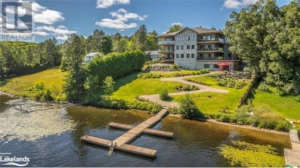
The ribbon of land between the lake and cottage has undergone monumental changes since lake development began. Many cottage owners removed the natural vegetation at the shoreline in an attempt to urbanize the area. We now understand that this has disturbed the natural environment for wildlife as well as reducing the water quality of the lakes with serious repercussions for human health.

Shoreline protection and an understanding of how it affects waterways is critical for a variety of wildlife species including spawning fish, turtles and nesting waterfowl as well as terrestrial song birds and small mammals. A dense strip of native vegetation is an important buffer filtering snow and water runoff and preventing soil erosion and providing a continuous wildlife corridor.

Experts agree that preserving and restoring cottage shorelines with native vegetation is the best solution for water quality and long-term shoreline stability. This would be the way nature kept shorelines stable and our lakes and streams clean long before the impacts of human development. Native plants are those that occur naturally in a region in which they evolved. They are the ecological basis upon which life depends, including mammals, birds and people. Without them and the insects that co-evolved with them, local birds cannot survive. Native wildlife of all kinds is reduced when the land along the shoreline is paved, turfed, ornamented and exposed. Clear-cutting vegetation, creating steep slopes or mowing to the water’s edge come with consequences.

Sourcing native plants is a lot easier than it used to be. A list of native plant nurseries and resources is provided at the end of the document. The use of fertilizers encourages weeds to the detriment of native plants. Pesticides are detrimental to all living things including humans, aquatic and terrestrial life.

We have created a document that attempts to bring together in one place a description of many common native species that will grow in the Highlands (Zone4), including those that are likely to be available from area nurseries. This revised document also includes the native insects and wildlife that are attracted to native flora as well as some edible and medicinal information about the plants.

This document can be used to help property owners identify the native plants that are already growing on their land so they can ‘preserve’ them and secondly to help property owners choose which natives to purchase and plant in order to ‘restore’ their property.

Download PDF Version Here

Filed Under: For Your Property Including Shorelines, Garden with Nature, Native Plants, Native Plants & Native Shorelines, Pests, Sunny Sites, Trees, Wildlife, Woodland

Erosion Solutions From Heavy Rain

October 25, 2021

Question: Can you slow water runoff at the top of a slope?

Natural Stone StepsHaliburton County Master Gardener advises you to build a small rain garden at the top of your slope. Add a small berm at the top of and/or mid-way down your slope. Put in a berm of logs, branches, soil and/or rocks to slow down the water running off and to allow time for the rain to absorb and for plant roots to establish. The idea is to place any material that will act to obstruct or slow down the path of water. Organic material has the additional benefit of providing texture and nutrients to your soil as it breaks down.

Clearing a shoreline or hillside of herbaceous plants, shrubs and trees can lead to erosion if not re-planted. Longer, steeper slopes, especially those without adequate vegetative cover are more susceptible to very high rates of erosion during heavy rains than shorter, less steep slopes.

Please remember that a rain garden is not the same as a water garden. There are 5 components to a rain garden:

1. Depression
2. Amended filter bed (see wood log trench below)
3. Berm on the low side
4. Rockery to slow water entering the garden if necessary
5. Plants tolerant of water and long periods of dryness (i.e. 2-3 days of standing water)

Woodlog Trench DiagramNatural Wood Log Berm


A rain garden is a low tech solution for a location that periodically gets inundated with water. For example some downspouts can’t handle the quantity of rain and the spill over can cause existing vegetation to die and erosion of soil. Hard surfaces channel water during torrential rain and spring snow melt events that cause erosion particularly on steep slopes. A rain garden and berm might be an affordable solution. A 5X10 foot rain garden 6 inches deep is equivalent to 11 rain barrels.

Dig your rain garden (12-18” deep) and fill with a combination of logs, branches, and wood chips at different stages of decomposition. Add native soil and locally composted organic matter. Plant. Remember good humid soil will store a lot of water. Other practices for extreme sites is to mulch deeply, contour the soil, plant native species adapted to the location and plant densely.

Select the Right Plants

In this situation plants that can withstand short periods of flooding and long periods of dryness are required. Xeriscaping plants i.e. those that tolerate drought won’t do well in a condition that includes extreme wet and extreme dry. Likewise plants that require constant moisture will not do well.

Do favor native over non-native plants and do not plant fast growing invasive plants however tempting that might be to stabilize your slope.

The following native Ontario plants can tolerate moist and dry soil:

Aster (Aster spp.)
Bergamot, Wild (Monarda fistulosa)
Black-Eyed Susans (Rudbeckia hirta)
Blazing stars, Rough (Liatris aspera)
Evening Primrose (Oenothera biennis)
Bittersweet (Celastrus scandens)
Goldenrod (Solidago spp.)
Verbena (Verbena spp.)
Yarrow (Achillea millefolium)
Sweet gale or bog myrtle (Myrica gale L) Myricaceae (Wax-myrtle or bayberry Family)
Non invasive ornamental grasses, native sedges (they look like grasses and can tolerate some shade), and rushes. Hierochloe odorata or Sweetgrass
Marginal Woodfern (Dryopteris marginalis) can tolerates mid-summer drought if planted in the shade.
Butterfly Weed (Asclepias tuberosa) a Zone 3 Ontario Native that is heat and drought tolerant,
Liatris aspera or Blazing Star, another Ontario native,
Schizachyrium scoparium or Little Bluestem (Ontario native)
Highbush Cranberry (V. trilobum or V. opulus var. americanum). This native shrub likes to grow in open, wooded, somewhat poorly drained locations. In the ideal location, cranberry can become very wide, often three meters or more, and reach about the same height.
Low bush Cranberry or Squashberry (V. edule)
Nannyberry (Viburnum lentago) will grow almost anywhere including shade, but they take on their best form in full sunlight. In full sun their fall leaf colors will be a vibrant purple-red.
Common or Eastern Ninebark up to 3 m, spring flower cluster, berries

Credit Valley Conservation planted native plants in their rain garden. They chose the following plants because they were widely available at local nurseries: Red Osier Dogwood, New England Aster, Tall Meadow Rue, Black Eyed Susans, Canada Anemone.  Shade-tolerant native plants included: Common elderberry, Sensitive Fern and Heart leaved Aster.

A dense base of day lilies and irises will give you a fibrous root system. While they aren’t native they are often planted in a naturalized landscape.

To buy plants please try your local garden center and check other sources listed in our list of suppliers and services here.


Article Sources

Credit Valley

Toronto Zoo

For additional plant selection please see Appendix C, List of Plants tolerating both wet and dry conditions. University of Guelph

Filed Under: Garden with Nature, Gardening for Guilty Pleasure, Native Plants & Native Shorelines, Planning and Design, Tips

Go Wild

July 4, 2020

Go Wild Article

"Homeowners in the Highlands are realizing that, in many cases, nature does it best.  Discover how using naturalist planting can enhance your cottage - and your own well-being."

View PDF here>

Filed Under: Garden with Nature, Go Wild

coordinator@haliburtonmastergardener.ca

privacy policy

Haliburton County Development Corporation logo


HCMG logo
Member Login
  • Ask a Question
  • Resources
  • About
  • News & Events

Follow us on YouTube badge

  • Newsletter Signup
  • Contact
  • Buy Local

© 2026 HaliburtonMasterGardener.ca   •   Website Development by TechnicalitiesPlus Inc.