

DEER PROOFING STRATEGIES
Many gardeners have their own deer-proofing ideas ~ from the bar of soap hanging from a tree to the group of aluminum foil plates or cds waving in the breeze. While some of these may work from time to time, for a while, there are other strategies that may have a longer lasting effect.
FENCING
Whitetail deer can jump at least 10 ft. (3 m) but an 8 ft. (2.5 m) fence should be ok; depending on the width of the garden. Expensive but reliable.
CHEMICAL DETERRENTS
For example, Coyote urine or various home-made recipes to spray on the leaves which can be found on the internet.
Recipes are based on combinations containing any of egg and/or milk with oil and a dash of dish detergent. Enhance with your choice of garlic or hot pepper sauce then age to disgusting (putrescent) and filter.
Commercial Products like Plantskydd and Bobbex do work if applied diligently and rotated. However, they are expensive.
It has been suggested that deer don’t like fuzzy leaves but they will, for example, eat Lambs Ears. They also may not like aromatic plants but have been known to eat Artemesia. Often deer won’t eat prickly plants although they seem to like Rosebushes.
Stinging Nettle and Thistles might be good to grow!
Native Plants have survived…
Deer will try anything once.
They prune apple trees and also eat all the apples they can reach.

Deer RESISTANT Plants
- Allium (Allium spp.)
- Bee Balm/Bergamot (Monarda)
- Blazing Star (Liatris)
- Bleeding Heart (Dicentra spectabilis)
- Brown/black eyed Susans (Rudbeckia)
- Butterfly weed (Asclepias)
- Cleome (Cleome)
- Coneflower (Echinacea)
- Cosmos (Cosmos)
- Daffodils (Narcissus spp.)
- Dead Nettle (Lamium)
- Delphinium (Delphinium)
- Foxglove (Digitalis)
- Globe Thistle (Echinops)
- Goldenrod (Solidago)
- Iris (Iris)
- Lady’s Mantle (Alchemilla)
- Lavender (Lavendula)
- Lupins (Lupinus)
- Marigolds (Tagetas)
- Monkshood (Aconite)
- Nicotiana (Nicotiana)
- Peonies (Paeonia Lactiflora)
- Shasta Daisy (Laucanthemum)
- Valerian (Valeriana officinalis)
- Ferns, Grasses & Sedges
- Rhubarb (Rheum rhubarbarum)
- Highbush Cranberry (Viburnum)
- Juniper (Juniperas)
- Lilacs (Syringa vulgarism)
- Spruce (Picea)
FAVOURITE Deer Plants
Deer have distinct preferences. The plants listed below are particular favourites of deer and may draw them into your garden. Unfortunately our favourites are often deer favourites!
Trees, Shrubs, Vines
- Apples (Malus)
- White Cedar (Arborvitae)
- Azaleas (Rhododendron spp.): Both deciduous & evergreen
- Roses (Rosas)
- Sumac (Rhus typhina)
Vegetable Garden Plants
- Beans (Phaseolus spp.)
- Blackberries, Raspberries (Rubus spp.)
- Broccoli, Cabbage, Cauliflower (Brassica spp.)
- Lettuce (Lactuca spp.)
- Peas (Pisum satirum)
- Strawberries (Fragaria spp.)
- Sweet Corn (Zea mays spp.)
Herbaceous Ornamentals
- Dahlias (Dahlia spp.)
- Daylillies (Hemerocallis spp.)
- Hostas (Hosta spp.)
- Impatiens (Impatiens spp.)
- Pansies (Viola x wittrockiana)
- Phlox (Phlox spp.)
- Spring Bulbs: Crocus (Crocus spp.) Tulips (Tulipa spp.)

 Master Gardener Carolyn Langdon advises you to build a small rain garden at the top of your slope. Add a small berm at the top of and/or mid-way down your slope. Put in a berm of logs, branches, soil and/or rocks to slow down the water running off and to allow time for the rain to absorb and for plant roots to establish. The idea is to place any material that will act to obstruct or slow down the path of water. Organic material has the additional benefit of providing texture and nutrients to your soil as it breaks down.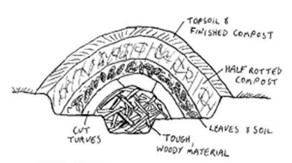
 There may also be areas of exception or ‘micro climates’. Factors that contribute to microclimates may be nearby bodies of water, presence of concrete or stone, slopes, soil type, vegetation, or structures. For example, plantings close to a house that are sheltered from northern winds will do well so you might experiment with a plant rated for a warmer zone, like a zone 5. Read the plant tags when you are buying new plants to ensure they will survive year after year.